

Most wall cracks are not an emergency. Fine, hairline cracks in plaster or render, especially ones that open and close with the seasons, are usually cosmetic and very common in Wagga Wagga homes sitting on reactive clay. The cracks that deserve professional attention are the ones that are wider than about 5 mm, stepped through brickwork, visible on both sides of a wall, getting longer or wider over time, or paired with other symptoms like doors that suddenly stick or floors that slope. If your crack ticks any of those boxes, the right next step is a proper foundation inspection, not panic, and not a tube of filler.
Here’s how to tell the difference, and what to do either way.
Why Wagga homes crack more than most
Wagga Wagga sits on some of the most reactive clay soil in NSW. Reactive clay swells when it’s wet and shrinks when it’s dry, and the Riverina gives it plenty of both, swinging between drought years and wet years, with flooding near the Murrumbidgee thrown in. As the clay moves, it lifts and drops the footings sitting on it, and the walls above show the strain.
That’s why cracking shows up in predictable patterns across town:
- Older brick homes in Turvey Park, Kooringal and Central Wagga (often on original strip footings) show the classic stepped cracks that follow the mortar joints, and cracks radiating from the corners of doors and windows.
- Post-war timber-floor homes develop cracks alongside sloping floors as stumps settle or decay.
- Newer slab homes in Estella and Boorooma, many built on cut-and-fill sites, can crack where one part of the slab sits on compacted fill and another on natural ground, settling at different rates.
A crack in Wagga isn’t automatically a foundation problem, but the odds are higher here than in most places, which is why it’s worth learning to read them. For the full story on what’s happening under your house, see our guide to why foundations move in Wagga.
A simple crack severity guide
Engineers in Australia commonly grade wall cracking by width. This table is a general guide only. Crack width alone never tells the whole story, and only a qualified professional can assess your home.
| Crack width | Typical description | Usual significance |
|---|---|---|
| Under 1 mm | Hairline; hard to see from a metre away | Very common; usually cosmetic |
| 1-5 mm | Noticeable; can be easily filled | Often minor; worth monitoring, especially if new |
| 5-15 mm | Obvious; may see daylight or feel a draught | Deserves professional assessment |
| 15-25 mm | Wide; brickwork may be displaced | Get a foundation inspection promptly |
| Over 25 mm | Walls out of alignment; bowing or bulging | Contact a professional without delay |
Two cracks of the same width can mean very different things. A 3 mm crack that’s been stable for a decade is a different animal to a 3 mm crack that was 1 mm at Christmas.
Cracks that are usually cosmetic
These patterns are common and rarely signal structural trouble on their own:
- Hairline cracks in plasterboard or render, especially along joints and cornices, often just shrinkage or normal seasonal flexing.
- Fine vertical cracks near new work: new homes and renovations settle and dry out for the first year or two.
- Cracks that open in late summer and close after autumn rain. On Wagga’s clay this seasonal breathing is almost expected. Worth watching, not worth losing sleep over. Our guide on why cracks open in summer and close in winter explains what drives this pattern and when a seasonal crack is worth a closer look.
- Short cracks confined to paint or render surface that don’t continue into the brickwork or masonry behind.
Cosmetic doesn’t mean ignore forever. Photograph them, date the photo, and check again in six months.
Cracks that deserve a closer look
Book a professional assessment if you spot any of the following:
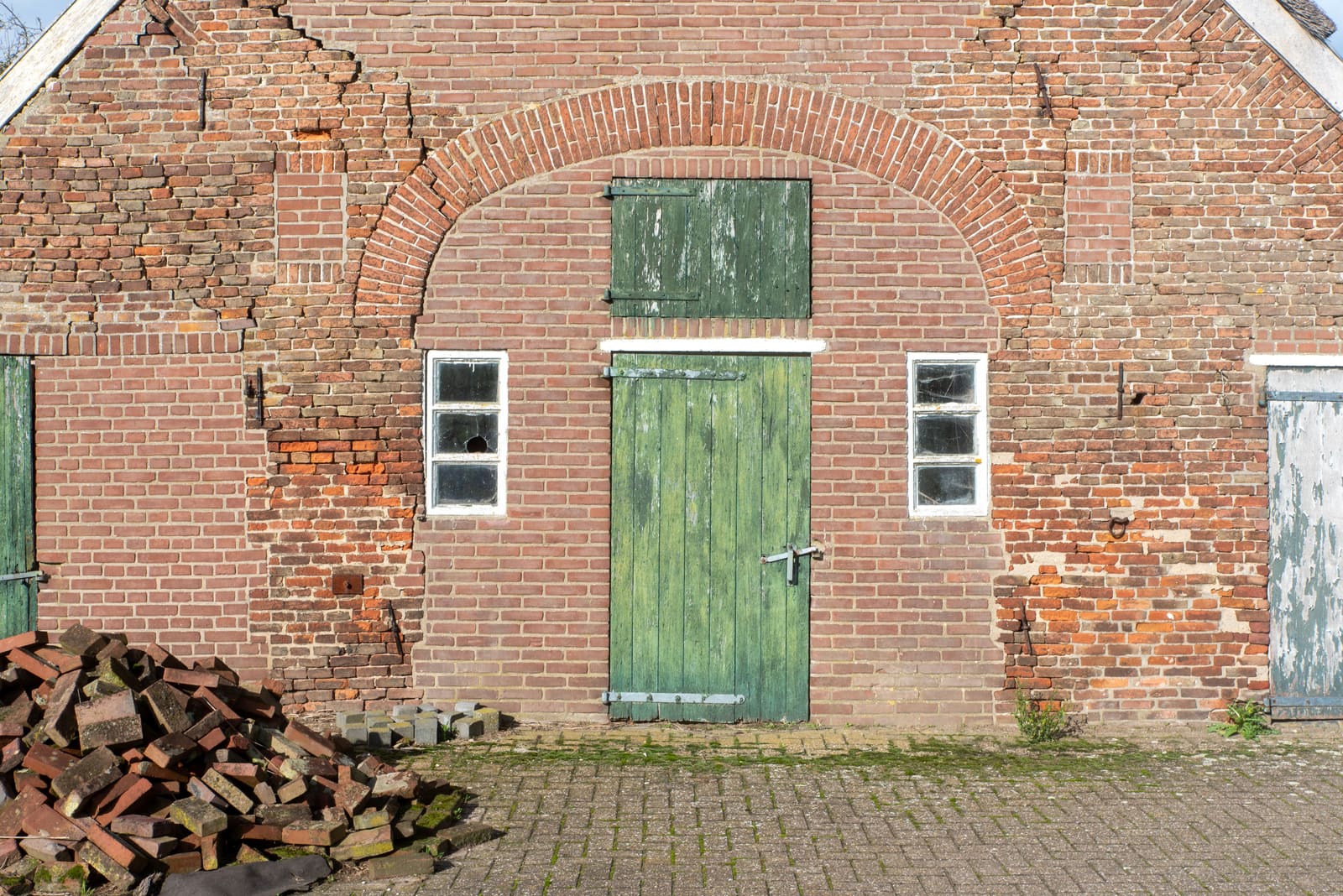
- Stepped cracks in brick walls: cracks that zig-zag along the mortar joints in a staircase pattern. This is the classic signature of foundation movement in the Riverina’s older brick homes.
- Cracks above door frames and windows: diagonal cracks running from the corners of openings are a common early sign that the footing below has dropped or heaved. A horizontal crack sitting right along the top of a window, with no diagonal component, is worth reading differently: it can point to a corroding steel lintel or a tired brick arch rather than the footing at all. Our guide to brick arch and lintel cracks above windows covers how to tell which is which.
- Any crack wider than about 5 mm, roughly the thickness of two stacked $2 coins.
- A crack that’s clearly growing: longer, wider, or reopening bigger after each repair.
- Cracks visible on both sides of a wall: inside and outside at the same spot suggests the crack goes right through the structure.
- Horizontal cracks or bulging brickwork: less common, always worth professional eyes.
- Cracks arriving with company: doors or windows that suddenly stick or won’t latch, gaps opening between skirting boards and the floor, sloping or bouncy floors, cracked cornices. One symptom might be coincidence; a cluster is a pattern. If it’s specifically a gap opening along a cornice, or a sagging ceiling, rather than a wall crack, our guide to cornice separation vs ceiling sag covers which pattern points to foundation movement and which usually doesn’t.
If your wall is rendered rather than exposed brick, the same width-and-pattern rules apply, but render can hide the mortar-joint detail that makes a crack easier to read, and it develops its own harmless surface crazing as it cures. Our guide to render cracks vs structural cracks covers how to tell ordinary render shrinkage apart from a structural crack underneath. The same logic applies outside the house too: a crack in a garage slab is easy to misread on its own, and our guide to garage slab cracks: when they matter covers which patterns there are cosmetic and which point to real settlement.
None of these means your house is failing; plenty of Wagga homes with stepped cracking need only modest, well-targeted repairs. But they do mean it’s time to find out what’s moving, not just patch the evidence.
What to do next: a five-step plan
- Photograph and date every crack. Include something for scale, such as a coin or a ruler. Your phone’s date stamp becomes your movement record.
- Measure and mark. Pencil a small line at each end of the crack and note the width at its widest point. Re-check monthly. In Wagga, compare like with like: a dry February against the previous dry February, not against a soggy July.
- Look for the cluster. Walk the house checking doors, windows, floors, skirtings and external brickwork. Note anything that’s changed.
- Check the easy suspects outside. Downpipes discharging next to the footings, garden beds watered against the wall, large trees within a few metres, leaking taps or hot-water overflow: moisture imbalance around the footings is the number-one driver of movement on reactive clay, and sometimes the fix starts with drainage rather than concrete.
- Book a foundation inspection if anything in the “closer look” list applies. A proper foundation inspection establishes what’s moving, why, and whether you need monitoring, minor repairs or structural work, with a structural engineer involved where the situation calls for it. Part of that inspection is a floor level survey, which maps exactly how much the floor has dropped and in what pattern, turning “it feels like it slopes” into an actual measurement alongside the crack.
What fixing cracks actually involves
Here’s the honest version: patching a structural crack without addressing the cause is redecorating, not repairing. The crack refills the same way it opened.
Depending on what an inspection finds, the fix might be:
- Cosmetic repair only: flexible fillers and repointing for stable, minor cracks. See our foundation and wall crack repair service for how this works.
- Drainage and moisture correction: sometimes the most cost-effective structural medicine on clay soils.
- Underpinning: extending or strengthening the footings where they’ve settled, designed with engineer involvement. Our underpinning cost guide covers indicative pricing.
- Re-levelling or restumping: for timber-floor homes where stumps have settled or deteriorated.
All structural work is carried out by appropriately licensed builders and specialists, with structural or geotechnical engineers involved where required. Every recommendation we make starts with an inspection, never a guess sight unseen.
Frequently asked questions
Are cracks in walls normal in Wagga Wagga?
Minor cracking is very common here. Wagga’s reactive clay soils shrink and swell with the seasons, and most homes show some hairline cracking as a result, particularly after a long dry spell or a very wet winter. What matters is width, pattern and whether the crack is changing.
When is a wall crack structural?
As a rule of thumb: cracks wider than about 5 mm, stepped cracks through brickwork, cracks that keep growing, cracks visible on both sides of a wall, or cracks paired with sticking doors and sloping floors all warrant professional assessment. Only a qualified inspector or engineer can confirm whether a crack is structural.
Why do I have cracks above my door frames?
Door and window openings are the weakest points in a wall, so when a footing drops or heaves, the stress shows up first as diagonal cracks from the corners of the frames. It’s one of the most common early signs of foundation movement we hear about from Wagga homeowners.
My crack opens in summer and closes in winter. Is that bad?
Seasonal opening and closing is typical of reactive clay doing its thing: shrinking through dry months and swelling when the rain returns. It’s usually not urgent, but it is worth photographing, monitoring and mentioning if you ever book an inspection, because big seasonal swings can gradually ratchet into permanent movement. Our crack width gauge guide covers how to set up simple DIY monitoring so “opens and closes” is a measurement, not a guess.
Should I just fill the crack and repaint?
For hairline cosmetic cracks, yes, a flexible filler is fine. For anything wider, growing, or stepped through brickwork, filling first means losing your best diagnostic evidence and hiding the symptom while the cause continues. Get it looked at first, then repair once.
How much does it cost to get cracks assessed?
A professional foundation inspection with a written report typically runs a few hundred dollars in the Wagga area. The exact fee depends on the property and the level of reporting you need. It’s a small outlay for certainty about your biggest asset. Any figures published here are indicative until confirmed by inspection and formal quote.
Worried about a crack? Start with answers, not repairs
Send us a photo of the crack and we’ll tell you honestly whether it looks like something to monitor or something to inspect, no scare tactics, no obligation. Use our Get a fast quote form for a free quote: if one’s warranted, your enquiry may be referred to an independent licensed contractor for a proper inspection, and they contact you directly.